BeepBeep Casino Complaints: Process, ADR & Reputation Signals
 Available in AU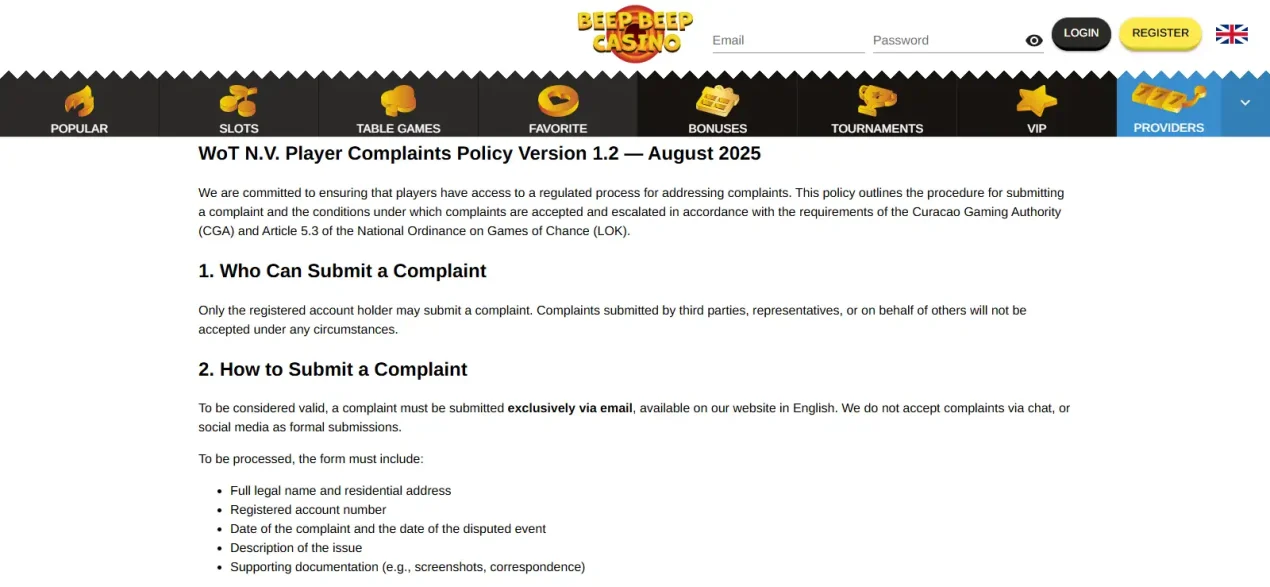
Contents
BeepBeep’s current formal complaints policy says only the registered account holder can submit a complaint, the submission must be made by email, and it must be filed within 180 days of the event. The policy targets acknowledgement within 2 business days for responsible-gaming matters and within 7 calendar days for other complaints. Responsible-gaming complaints have a 5-business-day resolution target, while other complaints are targeted for a written response within 4 weeks, with one possible additional 4-week extension if more review is needed.
If the operator issues a final response and the dispute is monetary and above EUR 100, the policy allows escalation to an independent ADR provider. The live policy does not name a specific ADR provider. It also states that the Curaçao Gaming Authority does not mediate individual player disputes. For an Australian reader, ACMA is not BeepBeep’s customer complaint or ADR body.
The formal complaint route in five steps
- Confirm that the registered account holder is submitting. The policy does not accept a formal complaint submitted by a third party or representative on behalf of the account holder.
- Use email, not chat or social media, for the formal submission. The policy says chat and social channels do not count as formal complaint submissions. The same page lists [email protected] as the site’s contact email.
- File within 180 days of the disputed event. The policy describes later submissions as time-barred, so the date of the incident matters even if support conversations continue for weeks.
- Send enough information to identify the account and dispute. The policy asks for the account holder’s full legal name and residential address, registered account number, the complaint date and event date, a description of the issue, and supporting documents such as screen captures or correspondence.
- Keep responding during the review. If the operator asks for more documents or clarification, the current policy gives the player 7 days to respond. An incomplete or late response can lead to the complaint being closed without resolution.
The practical point is to treat the first formal email like a case file, not a short chat message. Put the timeline in order, identify the disputed transaction or decision, attach the evidence that already exists, and keep a copy of the exact message sent. That makes it easier to compare the eventual written response with the issue originally raised.
The official BeepBeep complaints policy is the controlling source for these procedural details and should be consulted before relying on a deadline in a future dispute.
What evidence is worth keeping
A complaint file is stronger when it separates what happened from what the player believes it means. Useful records include transaction IDs, deposit or withdrawal timestamps, account messages, KYC requests, screen captures of the cashier state, bonus terms that applied at the time, and copies of support correspondence. The operator’s policy expressly lists supporting documents as part of a valid complaint submission.
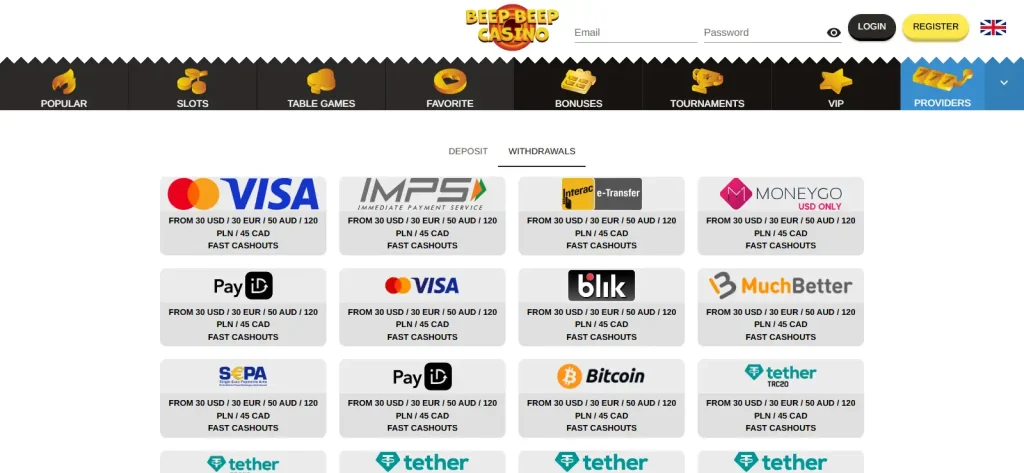
For a cashout dispute, compare the issue with the site’s withdrawal disputes before writing the complaint. That helps distinguish a delayed payment, an unmet turnover condition, a payment-method restriction and an identity-review hold. The complaint itself can then focus on the specific unresolved point rather than bundling several unrelated rules together.
For an identity or document dispute, use the verification process to separate the operator’s current verification triggers from the facts of the individual case. A complaint can challenge how a process was applied, but it should not assume that every request for verification is itself evidence of wrongdoing.
Current handling targets
| Stage | Current policy target | How to read it |
|---|---|---|
| Acknowledgement – responsible gaming | Within 2 business days | This is an acknowledgement target, not a promised final outcome. |
| Acknowledgement – other complaints | Within 7 calendar days | Keep the sent-email record so the starting date is clear. |
| Responsible-gaming complaint resolution | Target within 5 business days | The policy uses a faster target for this category. |
| Other complaint response | Within 4 weeks | The policy allows one additional 4-week extension if further information or internal review is necessary. |
| Player response to document or clarification request | Within 7 days | Missing the request can cause the complaint to close without resolution. |
These are policy timelines rather than a guarantee that every case finishes on the earliest date. The operator says the final decision will be issued in writing and that a rejected complaint will include reasons. For a later escalation, that written final response matters because the ADR stage is not available before it.
When ADR becomes available
The current policy puts ADR after the internal complaint process, not alongside it. A player who disagrees with the operator’s outcome can refer a case to an independent ADR provider only after receiving the formal final response. The dispute must also be monetary and exceed EUR 100. Non-monetary disputes and monetary claims at or below that threshold are not eligible under the published rule.
The policy also says a case can be escalated only once and that submissions to multiple ADR providers are not accepted. It describes ADR decisions as non-binding on the operator unless agreed in writing. Those conditions make the final operator response, the disputed amount and the evidence bundle important parts of the escalation file.
The live policy checked for this page does not identify a named ADR provider. This guide therefore does not invent one or substitute an Australian body. If a complaint reaches the ADR stage, use the provider information given in the operator’s current final-response material or current complaint-policy instructions.
What the Curaçao Gaming Authority does and does not do
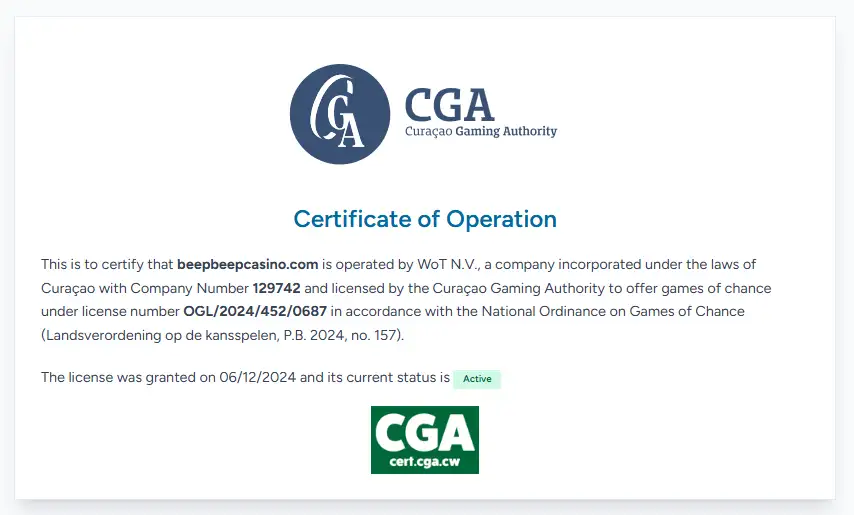
BeepBeep is operated by WoT N.V. under Curaçao Gaming Authority licence OGL/2024/452/0687, which is currently shown as Active on the regulator certificate. The operator’s complaint policy says the CGA supervises licensed operators but does not mediate individual disputes. Players can report potential licence-condition breaches, and the authority can use those reports for regulatory oversight and enforcement.
That is different from deciding whether an individual withdrawal, bonus or KYC complaint should be paid or upheld. The licence and regulation page explains the broader regulatory picture and why BeepBeep’s operator complaint route should be kept separate from Australian licensed-wagering channels.
For Australian readers, ACMA should not be described as the operator’s ADR channel. ACMA’s role in Australian online-gambling regulation is a separate jurisdictional issue. A player-specific BeepBeep complaint follows the operator’s published complaint process and, where the criteria are satisfied, its ADR route.
Which issues the policy says can be complained about
The official policy gives a broad list of possible complaint subjects. It includes deposit and withdrawal issues, bonus terms, account closure or restrictions, alleged game-outcome errors, responsible-gaming issues, player balances, KYC and verification, data protection, technical or software issues, AML concerns, issues involving minors, fraudulent games or practices, licence or regulation matters, and unfair terms and conditions.
The existence of a category in the policy does not prove that a complaint in that category is valid. It simply shows that the operator’s formal process is designed to accept disputes across those areas. A complaint should still identify the specific decision, transaction or event being challenged and attach evidence relevant to that issue.
How to read current reputation signals without score-chasing
Independent review and complaint sites can be useful for spotting themes, but they are not primary evidence for an individual allegation. The more useful questions are: When was the case submitted? Is the account of events detailed enough to evaluate? Did the operator respond? Was evidence shown? Was the case resolved, rejected, closed for lack of response or left open? Are similar themes appearing across several recent cases rather than in one anonymous post?
As checked on 17 September 2026, Casino Guru’s current BeepBeep complaint index displays 10 complaint records, with 0 open, 0 unresolved, 2 resolved and 8 rejected. The listed case topics include withdrawal delays, account restrictions, verification, bonus disputes, self-exclusion and account closure. The same review page says it has only four user reviews and does not yet calculate a user-feedback score because its threshold is five reviews.
Those numbers describe what that independent platform currently displays. They are not findings that every allegation was true or false, and they should not be converted into a one-line verdict about the casino. A rejected complaint can reflect many different procedural outcomes, while a resolved complaint can end in different forms of settlement. Read the case status and evidence, not just the headline.
Older user allegations also need special care. A historical post about a game, licence or payment problem is not current primary evidence that the same condition exists today. This page does not repeat old “fake game” accusations as current facts because the current complaint policy, current licence record and current product checks are stronger evidence for present-day claims.
The current Casino Guru review and complaint surface is best used as an attributed reputation signal, not as a substitute for the operator’s policy or regulator records.
A practical complaint checklist
- Use the registered account holder’s details.
- Submit the formal complaint by email within 180 days of the event.
- Include the account number, relevant dates, clear issue description and supporting records.
- Save a copy of the original complaint email and attachments.
- Respond to requests for clarification or documents within the policy’s 7-day window.
- Keep the final written operator response if the dispute remains unresolved.
- Check whether a monetary dispute exceeds EUR 100 before treating ADR as an available next step.
- Do not assume the CGA or ACMA will mediate the individual dispute.
- When reading public reviews, separate user allegations from documented case outcomes and current primary-source facts.
Bottom line
BeepBeep has a documented complaint route with concrete submission rules and handling targets. The registered account holder must use email, file within 180 days, include identifying and supporting information, and stay responsive during the review. The policy separates faster responsible-gaming complaint targets from the standard four-week process for other complaints, with one possible extension.
ADR is a later step, not the starting point. It requires a formal final operator response and a monetary dispute above EUR 100, and the live policy does not name a specific provider. The CGA can receive information about possible licence breaches but does not mediate individual player disputes. Recent complaint databases can show themes and case outcomes, but they are best used as reputation signals rather than proof. Use current operator policies and regulator records for procedural facts, and treat public reviews as attributed experience.
For the wider product picture, return to the Australia review.
This material was created by the BeepBeep Australia Guide team.
Related posts
BeepBeep Casino Withdrawals: Limits, Timing, KYC & Cashout Rules
BeepBeep Live Casino: Tables, Dealers and Game Types